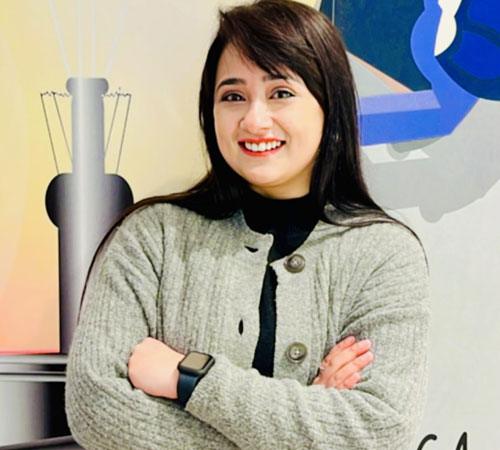
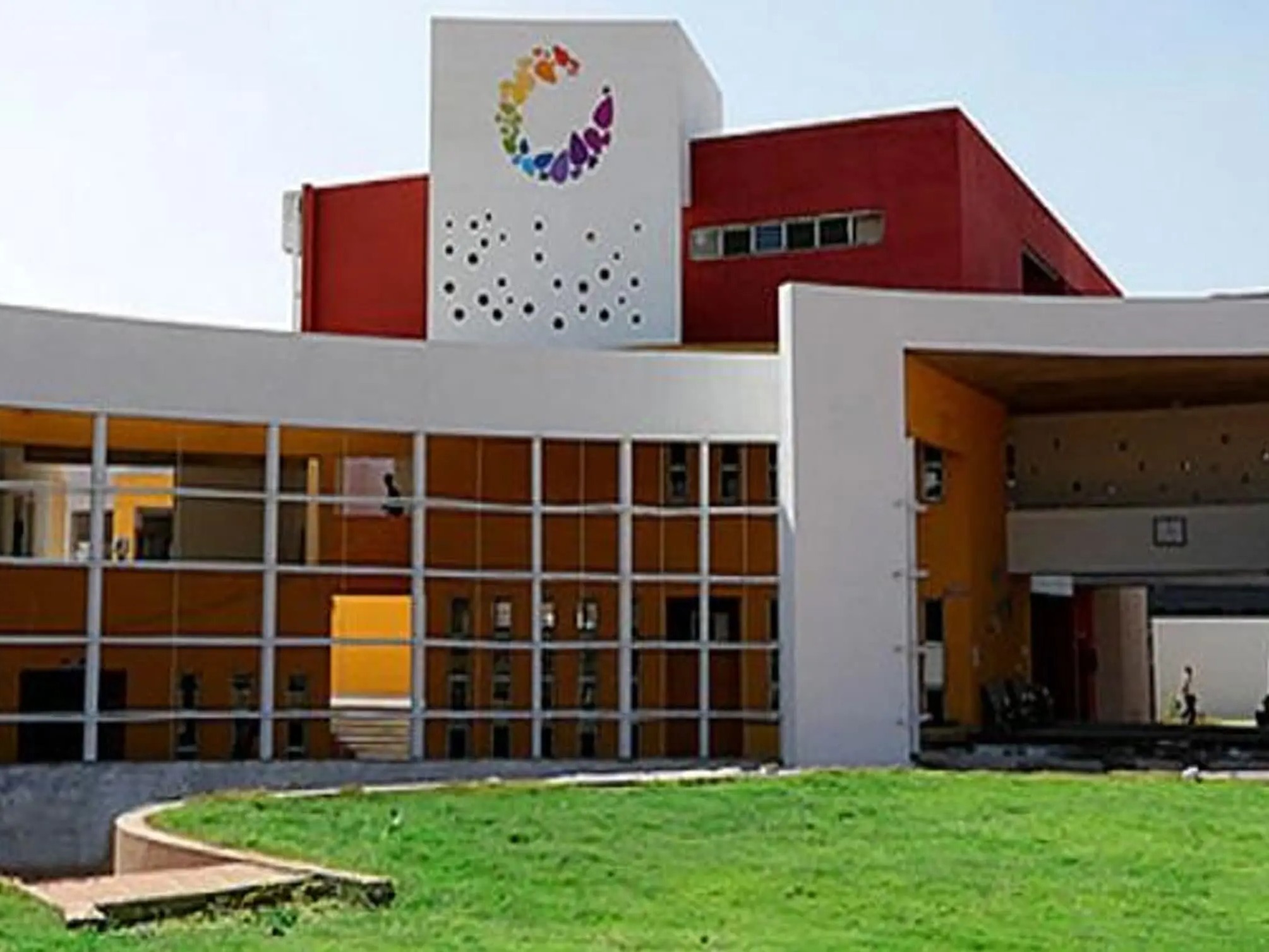
Education and experience are inseparable. What happens, when you meet someone with this hedonistic concoction? You get knowledge, insights and an unexplainable surge, to march ahead and be inspired. And this is exactly what we felt, when we got this unique opportunity to meet Dr. R. Gopal, Director, Dean and the Head of the Department of the Department of Business Management Padmashree Dr. D. Y. Patil University, Navi Mumbai.
Dr. R Gopal has introduced several niche and industry oriented programs like the MBA in Bio Informatics, MBA in Outsourcing Business, MBA in Retail Management, MBA in International Business Management, MBA in Supply Chain Logistics etc. Additionally he has also introduced several specialization programs like the MBA Core with specialization in Entrepreneurship Management or the Sports Business Management.
His corporate knowledge stems from 27 years in the industry across organistaions like Larsen and Toubro, Bush India Ltd., Tata Economic Consultancy Services and at Siemens. He has also published more than 100 research papers both in Indian and foreign journals. He has been awarded the Best Outstanding Research Pape at the 2nd Asia Pacific Marketing Conference held in Malaysia in October 2007.
Excerpts from the interview:
Being a Director, Dean and Head of the Department of Business Management is a huge task! How do you manage all the 3 roles?
For any organization, the role of the Director, Dean and the Head of the Department are linked together. Managing of such a role is quite difficult and calls for considerable amount of skill, resources and knowledge to manage all the three roles. Interpersonal skills are the key to managing everything seamlessly.
Research is an important aspect of management. How do you inculcate the development of research in the department?
Several steps are required to ensure that the development of research is going in the right direction. Some of the steps could be giving time off for doing the research, encouraging faculties to attend FDPs in this area, reimbursing the expenses, awarding points which could lead to promotions and other such incentives. Additionally it is now mandatory for faculties in B School to be involved in developing research papers etc. Also all faculties are today required to do their Ph. D.
Additionally the School also encourages students to undertake research projects in association with the industry personnel wherever possible. The expenses required for these projects is also borne partially by the school.
Research in Business Management vs industry specific course in Business Management – key differences? And their implication?
Research in Business Management is normally an applied research and is an ongoing process and is carried at the individual level or with a group of people to identify industry problems which would be useful to the industry. Each research project is a short duration project while an industry specific course in management is meant to produce students who can get employed in the industry. For e.g. A MBA in Pharmaceutical Industry Management involves the student to understand the nuances of the pharma industry and is not restricted to a specific topic in the industry. Or in the case of the Health and Hospital Program, the student is expected to understand the complete working of the hospital or the health sector.
The course curriculum for management studies needs constant improvisation to meet industry demands. What are the factors that contribute to this?
Industry is evolving and new businesses are emerging. For e.g. the health and the hospital sector is growing rapidly. Education has to keep pace and be of some service to the industry. The old era of shortages is over. Competition is increasing and industry is expecting that the student should start contributing from day one itself. Those institutes which cannot produce employable MBA students will be left by the wayside. While the basic structure of any management education remains the same for e.g. the basics of any marketing strategy would remain the same but its applications to different situations and different industries would vary and this is what industry would want the student to know. The curriculum therefore has to keep track about these changes. The Make in India concept enunciated by the present government would entail students to develop entrepreneurial skills and also learn to evaluate the various business plans.
Over the years, the strategy of management education has drastically changed. What major patterns / changes have you seen? And foresee?
The course curriculum has to be aligned with what the industry needs. The old concept of giving only theoretical knowledge is over. All the theoretical knowledge is currently available on the net or otherwise. What is required is industry specific knowledge, application knowledge and a feeling of hands on --- actually working in an organization on some projects. Additionally, industry requires students to have a holistic view of the various issues. They are looking at the holistic growth of a student both in terms of technical as well as the soft skill aspects. Over the years, issues related to environment, prevention of environment depredation, women empowerment, and gender sensitization issues will take a priority.
How do you ensure that correct standards are met to match industry requirements at DY Patil? Was it the same thought process you followed for MGM Institute of Management Studies?
At the D Y Patil University, School of Management strategies are evolved so that students develop holistically and are employable. Discussions with industry indicate that the industry gives the following weightage when evaluating a student e.g. 20% weightage for theoretical knowledge, 40% weightage for application knowledge and another 40% for the holistic development. Standards are therefore set in this direction. The evaluation of the student is also carried out in the same direction. The teaching learning and evaluation process is so ensured that the students are employable. Live Projects, Guest Lectures, Conferences, Industrial Visits, Social Entrepreneurship projects etc are some of the standards / processes that D Y Patil University School of Management uses to match industry requirements.
What are the upcoming courses in management vis-à-vis employment?
Industry oriented courses are the new courses which are of utmost important vis a vis employment. These courses should be skill based so that the unemployable graduates / post graduates can become employable.
Could you throw some light on the career prospects of Rural Marketing & Industrial Marketing?
Excellent prospects in these two areas. The market is growing in the rural sector and the MAKE in INDIA concept will call for students to not only start new ventures but also manage lead and steer several new ventures.
What are the new-age careers in Management, considering the abundance of MBA graduates today? Which sectors of MBA specialization will be in demand in future?
Industry oriented programs like the MBA in Pharmaceutical Industries Management, MBA in Biotech Management, MBA in Aviation Management, MBA in Sports Business Management, MBA in Health and Hospital Management, MBA in Banking and Insurance, MBA in Supply Chain and Logistics Management, MBA in International Business are some of the new programs that are likely to be in demand in the future.
You have a vast experience in both corporate & academics. What, according to you, are the crucial gaps in skill set in today’s management professionals?
The biggest gap is in the application knowledge the student is likely to have. Additionally the holistic development of the student i.e. knowledge about business etiquettes, dining etiquettes, personality development, communication skills are some of the crucial gaps in the management professionals.
What are the USP’s of studying management in DY Patil University?
Very good interaction and close contact with the Industry. Students get to do live projects, consultancy projects and conferences on every sphere of the management help in knowledge dispersal and close interaction with the industry personnel are some of the USP’s of the D Y Patil Programs.
Additionally, every year, around 250 to 300 companies visit the school and of which more than 35% of the companies come every year indicating the faith and trust that these companies have in the school and the products of the school.
What research and entrepreneurial activities do you plan to push in DY Patil University to position it as a futuristic B-School? Could you please share some case studies?
Industry oriented research, incubation cells are some of the new thrust areas that the school is planning.
Please share you vision of MBA in India for the next 5 years. How will it change the dynamics of the market and therefore employment?
There is a good growth for MBA in the future. There will be a need for quality MBA who will be well paid and will be fully employable.
Advice to our students for their education & career? How should they go about it?
Please select the MBA School carefully. Study the placements, faculty infrastructure and finally whether it is recognized by UGC / AICTE.