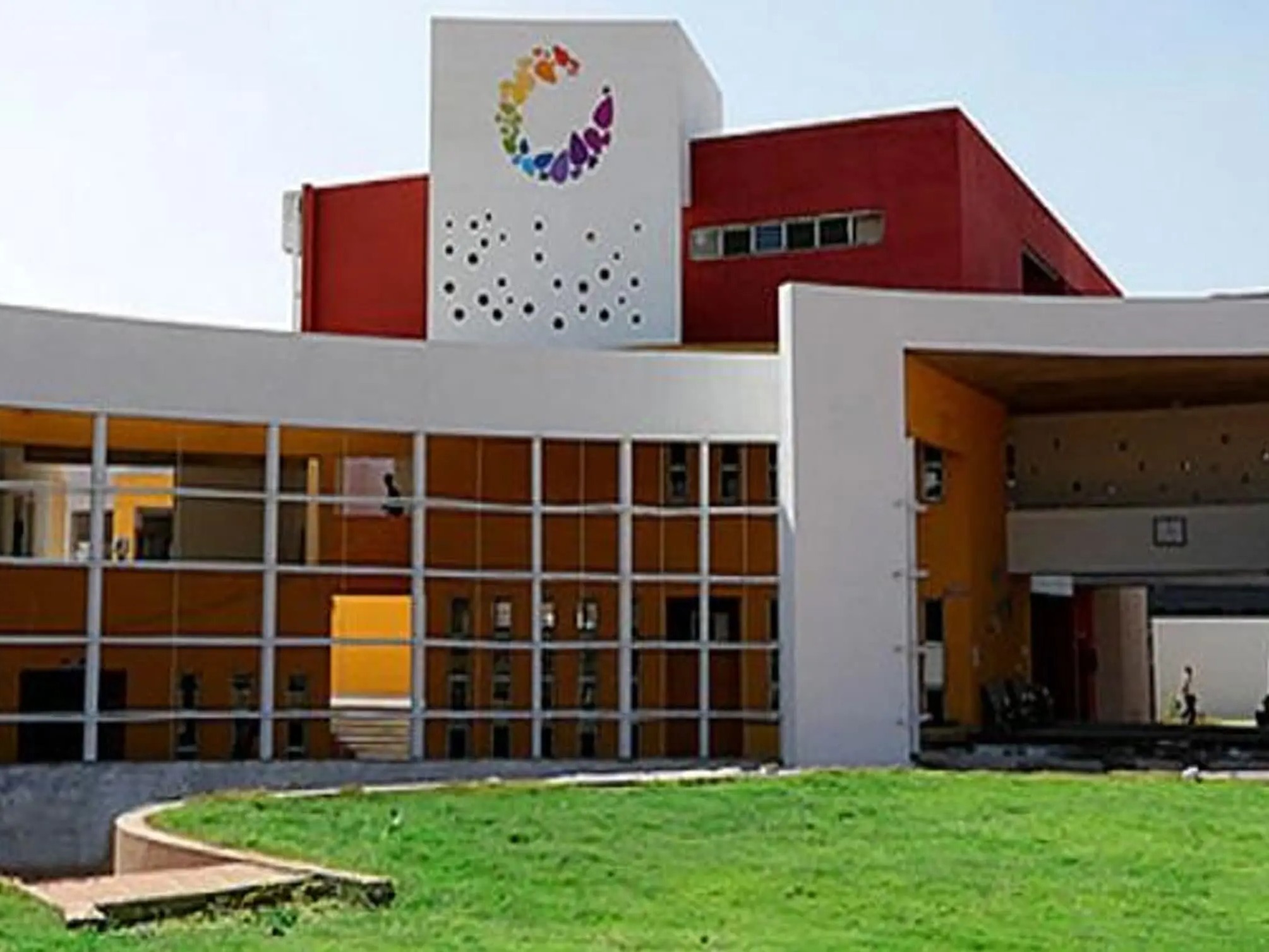
The director of Bharathi Vidyapeeth Deemed University, reveals all that matters when it comes to cracking MBA. click4college organised an exclusive chat with hon'ble Dr Nitin Nayak and get his insights. Bharati Vidyapeeth Deemed University (BVDU) has emerged as a global university with a wide offering of programs and courses spanning varied educational faculties. Some of the courses offered at BVDU are Law, Engineering, Medical, Dental, Geo Informatics, Architecture, Fine Arts, Computer Application, Hospital Administration, Biotechnology and Management to name a few.
Here's what Dr Nitin Nayak had to say:
1. Over 20 years of experience, that’s a huge milestone! How has your journey been so far?
Ans: The journey has been grotesque and tumultuous at times but seems to be rewarding today. Being from a small town in Sangli, now I am sitting in the hub of India – New Delhi, I feel emotionally satisfied as the transition from hotelier to academician has been quite fruitful.
2. As Director, Bharati Vidyapeeth University Institute of Management and Research, what is your major role?
Ans: Education needs to be dynamic and innovation is a tool for it. I have tried to implement innovative concepts like contextual learning and training material – through infrastructure specific case studies, industry interface, knowledge management tools, incubation centers to promote entrepreneurship development and training to take decisions which affect multiple bottom lines; for both students and faculty members. I have implemented my own notion of conflict resolution and workplace demarcations i.e., “Carefronting” and “Integrating Style of Leadership”. The adoption of the two methodologies has led to successful transformation from conflict to collaboration. My aim has always been to promote a learning organization. Thus, I am sitting at the core and making positive spins around management education.
3. Being involved with commerce/Management for your entire life, what, according to you are the striking changes in the field of education as of now?
Ans: The challenges are many. Curriculum today needs to capture the broad reality of emerging economies, particularly of India. We are lacking courses on responsible business, public service delivery, managing scarce resources and sociology of markets including the rural immersion. Today the management education is unable to overcome their narrow technical perspective to draw upon expertise from outside consultancy parties to provide students with a broad perspective on societal issues. We need to explore newer horizons across industry and government interfaces, cross sectional learning from one’s diverse peer group and involvement in current events which shape the economy through academia – corporate engagement. The biggest challenge is to provide good quality education on a very large scale. The management education should also have a societal perspective to its credit as it will tend to produce socially responsible managers which in turn will demonstrate the highest levels of fairness, transparency and accountability, subsequently leading to a well earned goodwill.
4. MBA offers so many specializations. What according to you is the most in demand right now?
Ans: Investment Banking & Portfolio Management is the most in demand right now owing to the economic variability.
5. You were responsible for marketing & image building in institutes at all India level. Tell us something about that, how did you execute it successfully?
Ans: Management Education is basically tactile learning. B-Schools earns its name through its graduates and the importance of faculty at a B-School can never be overstated. They are respected in the industry but owing to business’s turbulent times they need to stimulate thought, breeding creativity and mentoring initiatives. They also strive to foster an environment of knowledge and innovation by way of providing intellectual resources like books/cases, simulation software and industry interactions. I have experienced richness of our cultural heritage as students come from diverse backgrounds add to my experiential learning.
6. What impact did it have on the students?
Ans: The vision of Bharati Vidyapeeth Institute of Management & Research (BVIMR), New Delhi is “Leadership in Management Education through Innovation and Excellence”. Its mission is to foster a conducive learning eco-system for students, faculty and industry germinating capable upright managers and entrepreneurs to contribute meaningfully to industry and society. The mission forms the premise for the ideology of BVIMR. The special courses offered under these are Environmental Studies, Road Safety & Traffic Management, Disaster and Crisis Management, Certificate Course in Executive Excellence (CCEE), E-Learning Certificate Programme of ICICI Bank and Cyber Security.
7. Building industry-institute interaction. What role did you play here and how does it help student in their course of education?
Ans: We have an established an Entrepreneurship Development Centre in collaboration with NEN (National Entrepreneurship Network) and Industry Institute Partnership Cell (IIPC) which has tie-ups and liaison with professional and industrial bodies like AIMA, CII, FICCI, PHD Chamber of Commerce and Industry, ASSOCHAM, National HRD Network, Media Channels etc. for various sponsored programmes, projects, seminars etc. and providing industry exposure to our students. The Corporate Resource Center (CRC) with its objective of bridging the gap between the bright energetic and aspiring youth talent of the BVIMR and the industry for meeting their personnel requirements and to promote entrepreneurship helps in undertaking live projects offered by the Corporate Houses and organizes Corporate Days where industry key personnel are invited to share their views and experiences which gives a feel of the real life corporate world to the students.
8. One of your specializations includes Small Enterprise Management. What is it and how one can go about it?
Ans: Experiential instruction from faculty with years of industry experience in small business management and entrepreneurship. It is a cross-section of business and technology thus applying skills and methods needed to launch a new enterprise, take over an existing business, or be a dynamic manager who can make a dramatic difference in the future of a small business. There are universities which impart such specialized courses.
9. With so many MBA institutes in the country today, do you think there is a disconnection between the demand and supply of MBA institutes vis -a-vis MBA students?
Ans: Yes, the fact is true. The ultimate goal of MBA is not sitting at a good position and churning out money; it can be earning short term monetary benefits based on specialization thus leading to expertise, consultation and entrepreneurial dreams.
10. We get a lot of queries on MBA entrance exams like CAT, MAT, XAT, SNAP etc with respect to which one is better and more in demand. Could you throw some light on it?
Ans: Today, many top notch B-Schools in India offer specialization in different disciplines of business management. The key attractive factor includes superlative education and learning, but also attracts recruiters offering best packages in India.
The top B-Schools either affiliate themselves to a common national level entrance test or take their own aptitude test to select candidates.
11. How should students choose their MBA specialization?
Ans: The students should choose their MBA specializations based on the following factors – one’s personal strengths, qualifications should be considered, following one’s interest, never going with one’s seasonal opportunities and future career goals.
12. On what parameters should a student choose an MBA institute?
Ans: The parameters for choosing an MBA student are Recognition, Payback, Placement, Infrastructure, Faculty, Specialization, Selection Ratio and Location.
13. Should placement be the core driving force behind MBA institute?
Ans: While placement is an important responsibility of business schools, it should not become their paramount focus. The emphasis of the placement cells in business schools should shift from pure placement services to professional career planning, incubation centers and consultation services, which is an acute, unfulfilled need even in the best of business schools in India.
14. While there is no short cut way to carve out a niche career for yourself, what should be the take aways from a particular institute for a student?
Ans: The focus should revolve around developing practitioners who understand managing the human element of business, developing innovation through bounded rationality and learning to balance intuition and logic in the long run.
15. Many students, after their MBA/PGDM decide to start their own ventures. What are the 5 basic things that they should take care of before turning entrepreneurs?
Ans: The following are the characteristics of becoming an entrepreneur:
- Risk Lover
- Indigenous Assessor
- Passion to work for one-self
- Reality checker
- Master of Negotiations
16. Any message for the future MBA students?
Ans: For students of MBA, the equation Your Time = Your Future is very much applicable. I advise students never to quit and strive hard to achieve success.
Source: Dr Nitin Nayak (Director of Bharathi Vidyapeeth Deemed University, Pune)
Related Artcles:
Why Distance Learning MBA May Be Both Good and Bad For You!
TERI Invites Application for Admission to its various MSc/M Tech/MA and MBA programmes
Jamia Hamdard invites applications for MBA admissions 2013
Frequently Asked Questions
Sorem ipsum dolor sit amet consectur adipiscing elit sed eius mod nt labore dolore magna aliquaenim ad minim sorem ipsum dolor sit amet consectur adipiscing elit sed eius modam.
Sorem ipsum dolor sit amet consectur adipiscing elit sed eius mod nt labore dolore magna aliquaenim ad minim sorem ipsum dolor sit amet consectur adipiscing elit sed eius modam.
Speak to Counselor
Gallery